An out-of-service order costs far more than the repair that would have prevented it. The good news is that the defects which strand trucks are predictable, and nearly all of them are visible during a careful walk-around. This is what to look at, in roughly the order an inspector will.
Brakes and Air System
Brake defects lead the citation lists year after year, and adjustment is the most common single problem. Slack adjuster travel beyond specification is both an easy find for an inspector and a genuine safety issue on a loaded truck coming down a grade.
Air leaks are the other half. Charge the system fully, shut down, and listen. A leak you can hear standing beside the truck is one an inspector will find in seconds, and a system that will not hold pressure is not a paperwork problem.
- Slack adjuster travel within spec
- No audible leaks at pressure
- Chambers and lines undamaged
- Pressure builds in normal time
Tires, Wheels and Hubs
Tread depth is the obvious check, but damage matters just as much. Sidewall cuts, exposed cord, bulges and repairs in the wrong place are all out-of-service items regardless of how much tread is left on the tire.
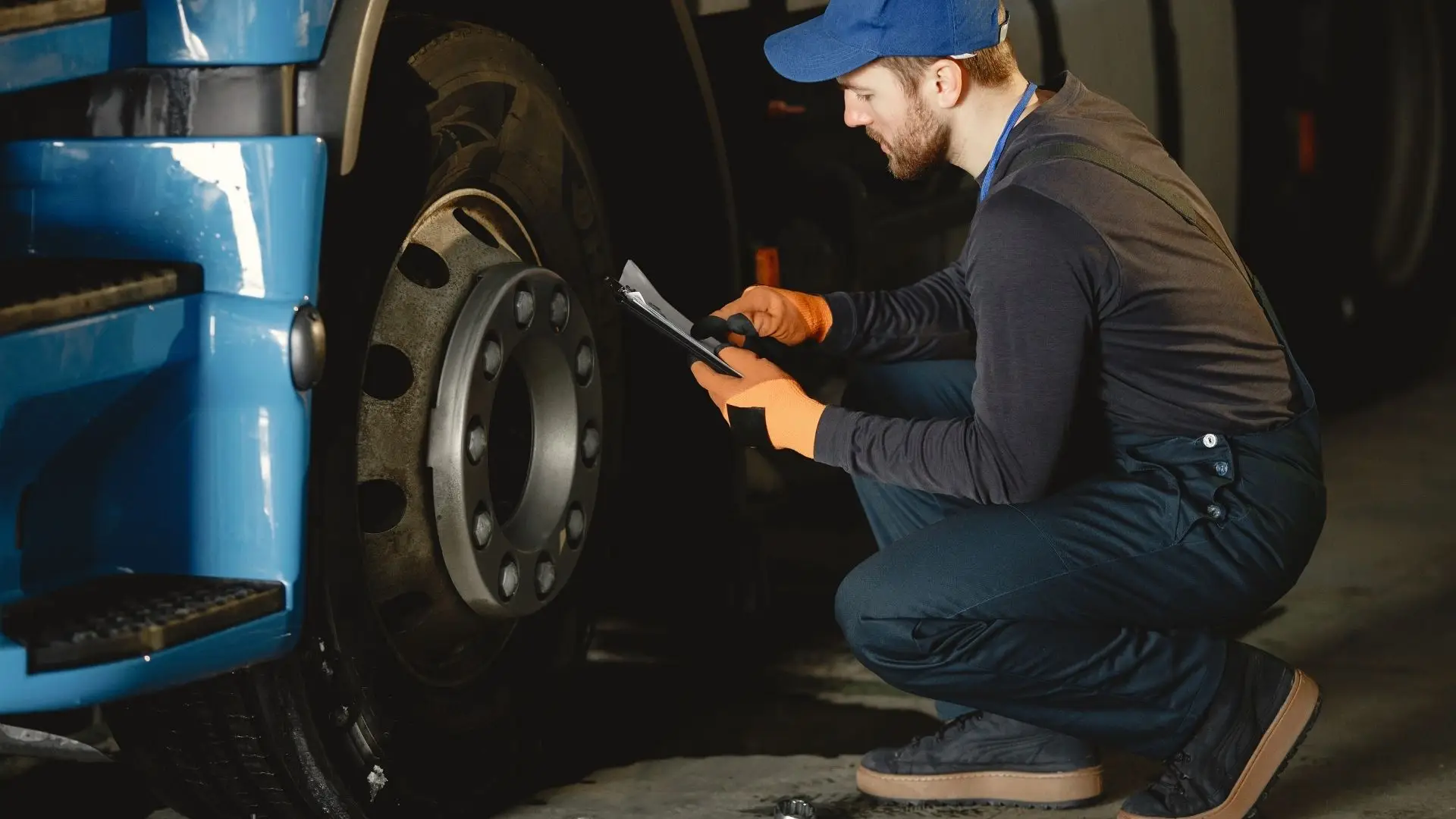
Look at the wheel end while you are down there. Loose or missing fasteners, oil weeping past a hub seal, and any sign of heat discolouration all point at problems that end runs, and all of them are visible without tools.
- Tread depth on steer and drive
- No sidewall cuts or bulges
- All fasteners present and tight
- No grease past the hub seal
Lighting and Electrical
Lighting is the easiest category to fix and one of the most frequently cited, largely because nobody walks the trailer often enough. Markers, clearance lights, brake lights and turn signals all need checking with somebody watching, or by using a wall.
Corrosion is the root cause more often than bulbs are. Road treatment attacks the trailer plug, the grounds and the harness where it crosses the frame, and a connection that works intermittently will fail at the worst time.
- All markers and clearance lights
- Brake and turn signals both sides
- Trailer plug clean and undamaged
- Harness secure where it crosses
Coupling, Frame and Suspension
The fifth wheel gets looked at closely because a failure there is catastrophic. Check the locking jaws engage properly, the mounting is secure, and there is no visible cracking around the plate or its mounts.
Suspension is next. Broken leaves, deflated airbags, missing or shifted U-bolts and worn bushings all change how the truck sits and how the load behaves, and a vehicle sitting visibly crooked draws attention before anything else does.
- Fifth wheel jaws locking fully
- No cracks around mounts
- Airbags holding at ride height
- Springs and U-bolts intact
Paperwork and the Cab
Mechanical condition is only half of an inspection. Registration, medical certification, hours records and required documentation all get checked, and a truck in perfect mechanical order still fails if the paperwork does not hold up.
In the cab, the basics matter: a working horn, wipers that clear the screen, mirrors intact and adjusted, a seat belt in good condition, and the fire extinguisher charged and properly secured rather than rolling around behind the seat.
- Documentation current and to hand
- Extinguisher charged and mounted
- Wipers, horn and mirrors working
- Emergency triangles on board
Need this handled rather than explained? We cover the I-44 corridor around the clock and most repairs happen where the equipment already sits.